Introduction: Why Your Investment Portfolio Matters More Than Your Stock Picks
Every year, millions of investors enter financial markets hoping to build wealth, achieve financial independence, or prepare for retirement.
Many start with the same question: Which stock should I buy?
But experienced investors often begin with a more important question:
How should I structure my investments to achieve my financial goals without taking unnecessary risks?
The distinction matters.
A portfolio concentrated in a few popular technology companies might generate impressive returns during favorable market conditions. However, that same portfolio could experience devastating losses when investor sentiment changes or the technology sector enters a downturn.
A diversified investment portfolio takes a different approach.
Rather than depending on one company, industry, or market, it distributes capital across investments with different characteristics.
The goal isn’t to eliminate risk. That’s impossible.
Instead, the goal is to take risks deliberately, avoid risks that offer little expected compensation, and create a strategy you can maintain through changing economic conditions.
In this guide, you’ll learn how to build an investment portfolio from the ground up, even if you’re starting with a relatively small amount of money.
1. What Is an Investment Portfolio?
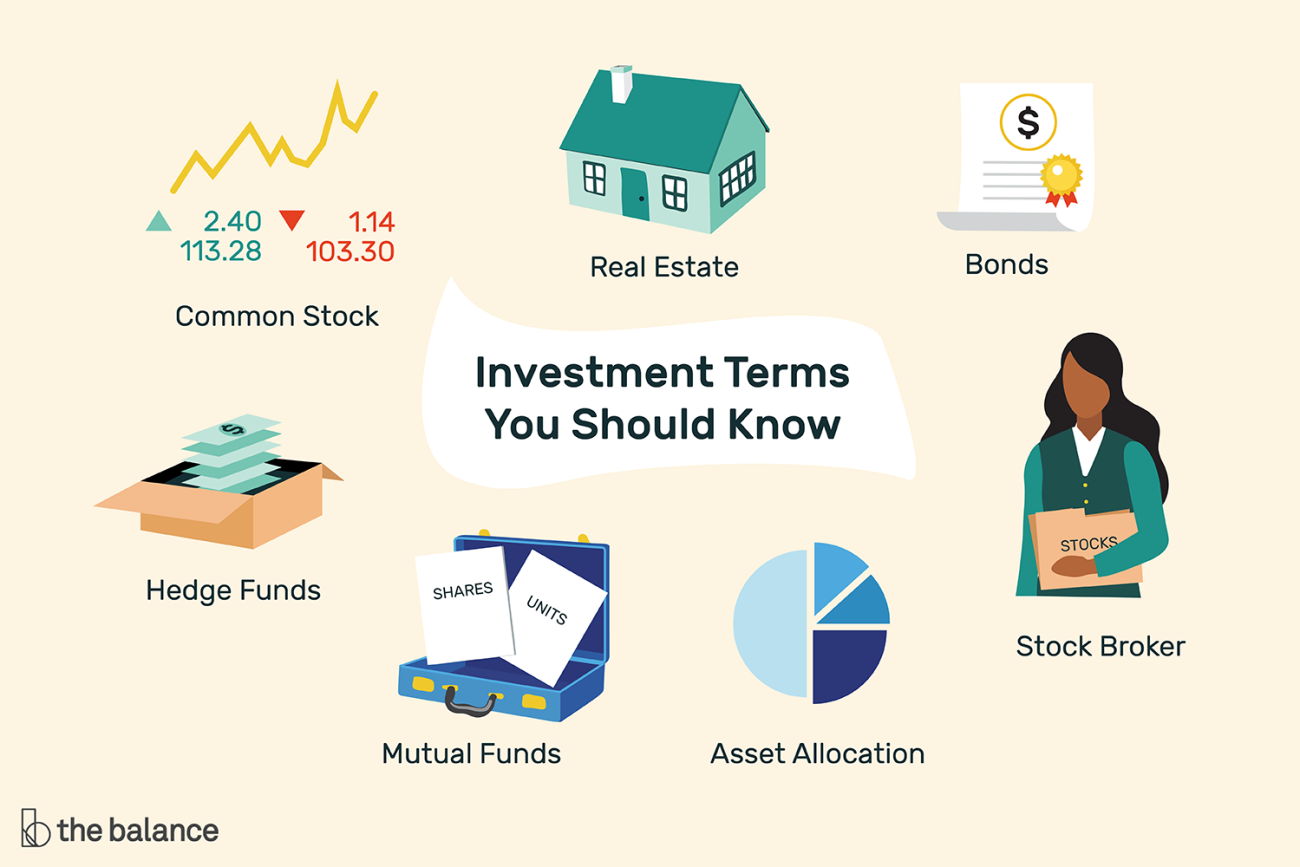
An investment portfolio is a collection of financial assets owned by an individual, institution, or organization.
A typical personal investment portfolio may contain:
- Stocks: Ownership shares in publicly traded companies.
- Bonds: Debt securities issued by governments, corporations, or other organizations.
- Exchange-Traded Funds (ETFs): Investment funds that trade on stock exchanges.
- Mutual Funds: Pooled investment vehicles managed according to defined strategies.
- Cash and Cash Equivalents: Bank deposits, Treasury bills, and other relatively liquid instruments.
- Other Assets: Real estate investments, commodities, or alternative investments.
Not every portfolio needs every asset class.
For many individual investors, a combination of diversified stock funds, high-quality bond funds, and appropriate cash reserves can provide a practical foundation.
The Three Fundamental Objectives
A portfolio generally balances three competing objectives.
Growth
Growth-oriented investments aim to increase wealth over time. Stocks are commonly used for this purpose because shareholders participate in the potential growth of corporate earnings.
Capital Preservation
Capital preservation focuses on protecting money needed for near-term obligations or important financial goals.
Cash deposits and high-quality short-term government securities may serve this purpose, depending on their credit quality, liquidity, and currency.
Income
Income-oriented investments generate cash flows through interest, dividends, or distributions.
Bonds are frequently used for income, although their market prices can fluctuate, and payments are not guaranteed in every case.
The appropriate balance depends on your goals, financial circumstances, and investment horizon.
2. Establish Your Financial Foundation Before Investing
A common mistake is investing money that may be needed for immediate expenses.
Financial markets can decline without warning. If an unexpected expense forces you to liquidate investments during a downturn, temporary market volatility can become a permanent financial loss.
Before building a portfolio, consider three essential foundations.
Create an Emergency Fund
An emergency fund provides cash for unexpected expenses such as medical bills, unemployment, or urgent home repairs.
A commonly used starting guideline is to maintain approximately three to six months of essential living expenses.
For example:
| Monthly Essential Expenses | 3-Month Reserve | 6-Month Reserve |
|---|---|---|
| $1,500 | $4,500 | $9,000 |
| $2,500 | $7,500 | $15,000 |
| $4,000 | $12,000 | $24,000 |
| $6,000 | $18,000 | $36,000 |
The appropriate amount depends on income stability, household responsibilities, insurance coverage, and access to other resources.
Someone with irregular income may require a larger reserve.
Emergency savings should generally be held in accessible, relatively low-risk instruments rather than volatile stocks.
Evaluate High-Interest Debt
Suppose you carry a credit card balance with a 22% annual interest rate.
Paying down that balance can avoid substantial interest costs. Investing while carrying expensive revolving debt may be financially disadvantageous, particularly when potential investment returns are uncertain.
This doesn’t mean every debt must disappear before investing.
Low-interest mortgages, student loans, and employer retirement-plan matching benefits may require different considerations.
The important principle is to evaluate debt costs alongside your investment opportunities.
Separate Short-Term and Long-Term Money
Money needed within the next year or two generally shouldn’t depend on stock market performance.
Consider separating savings into three broad categories:
| Time Horizon | Primary Objective | Assets to Consider |
|---|---|---|
| 0–3 years | Liquidity and capital preservation | Cash, insured deposits, short-term government securities |
| 3–10 years | Balance growth with capital stability | A goal-specific combination of bonds, cash, and equities |
| 10+ years | Long-term growth | Diversified equities, potentially combined with bonds |
These are planning frameworks, not rigid allocation rules. The exact investment mix depends on how flexible your spending date is and how much loss you could tolerate.
3. Understand Asset Allocation: The Foundation of Your Portfolio
Asset allocation refers to the percentage of your portfolio invested in different asset classes.
It is one of the most important decisions an investor makes.
Consider two portfolios.
Portfolio A
- 90% stocks
- 10% bonds
Portfolio B
- 40% stocks
- 60% bonds
Portfolio A has greater exposure to the growth potential of equities. However, it may also experience larger short-term losses.
Portfolio B emphasizes relatively defensive fixed-income exposure but may have lower long-term growth potential.
Neither portfolio is universally superior.
The appropriate allocation depends on the investor.
Three Illustrative Portfolio Models
| Asset Class | Conservative | Balanced | Growth-Oriented |
|---|---|---|---|
| Stocks | 30% | 60% | 80% |
| Bonds | 60% | 35% | 15% |
| Cash | 10% | 5% | 5% |
| Total | 100% | 100% | 100% |
These are hypothetical examples, not personalized investment recommendations.
A conservative allocation may be appropriate when preserving capital is particularly important.
A balanced allocation attempts to combine potential growth with exposure to relatively defensive assets.
A growth-oriented allocation accepts greater equity-market volatility in pursuit of long-term appreciation.
Importantly, bonds can also lose value, particularly when interest rates rise or issuers experience financial difficulties. A conservative portfolio is not a risk-free portfolio.
Risk Tolerance vs. Risk Capacity
Investors often confuse two related concepts.
Risk tolerance measures your emotional willingness to experience investment losses.
Risk capacity measures your financial ability to absorb those losses without disrupting your goals.
Imagine two investors who both claim they can tolerate aggressive investments.
Investor A has stable employment, substantial savings, and 25 years until retirement.
Investor B expects to use most of their investment portfolio to purchase a house next year.
Even if both investors feel comfortable with risk, their financial ability to accept losses is very different.
A suitable portfolio should account for both risk tolerance and risk capacity.
Stress-Test Your Allocation
Suppose you have a $50,000 portfolio:
- $35,000 in stocks
- $15,000 in bonds
Your allocation is 70% stocks and 30% bonds.
Now imagine a hypothetical market environment in which stocks fall 40% while bonds fall 5%.
The portfolio’s approximate loss would be:
(70% × -40%) + (30% × -5%) = -29.5%
Your $50,000 portfolio would decline to approximately $35,250, before any fees, taxes, or trading activity.
Ask yourself:
Could I tolerate seeing my portfolio lose almost $15,000 without abandoning my investment strategy?
If the answer is no, a less volatile allocation may be more appropriate.
This type of scenario analysis is often more useful than choosing an allocation based entirely on age or optimistic return projections.
4. Diversification: Why Owning More Investments Isn’t Always Better
Diversification means spreading investments across assets that do not necessarily respond identically to economic developments.
It can reduce the impact of poor performance from an individual company, industry, or region.
However, diversification doesn’t guarantee positive returns or prevent losses during widespread market declines.
Diversification Across Companies
Owning one company’s stock exposes an investor to company-specific risks.
These can include:
- Management failures
- Competitive disruption
- Regulatory problems
- Accounting scandals
- Product failures
- Financial distress
A diversified equity fund spreads company-specific exposure across many businesses.
Diversification Across Sectors
A portfolio containing 20 technology stocks may still be highly concentrated.
Those businesses may respond similarly to changes in interest rates, technology spending, or investor expectations.
Diversification across sectors such as healthcare, industrials, financial services, consumer goods, and utilities can help reduce this concentration.
Geographic Diversification
Investing exclusively in one country creates exposure to that country’s economic, political, regulatory, and market conditions.
International diversification provides access to companies operating across different regions.
A globally diversified equity portfolio may include:
- United States equities
- Other developed-market equities
- Emerging-market equities
Global diversification introduces additional risks, including foreign exchange movements and geopolitical developments.
Nevertheless, it can reduce dependence on the fortunes of a single national stock market.
Beware of Hidden Portfolio Overlap
Consider an investor who owns:
- A broad U.S. stock market ETF
- An S&P 500 ETF
- A large-cap growth ETF
- A technology-sector ETF
At first glance, four ETFs may appear diversified.
In practice, these funds could share significant exposure to the same large technology companies.
Buying additional funds does not automatically improve diversification.
Practical action: Review the underlying holdings, sector weights, geographic exposure, and concentration levels of your funds.
A simple portfolio with two or three complementary funds may be more diversified than a complicated portfolio containing ten overlapping investments.
5. Choose Between Individual Stocks, ETFs, and Index Funds
Once you understand asset allocation, the next question is how to implement it.
Individual Stocks
Buying individual stocks allows investors to own selected companies directly.
Potential advantages include:
- Control over company selection
- Flexibility to construct a customized portfolio
- No fund-level management expense ratio
However, individual stock selection requires substantial research.
You may need to analyze financial statements, industry competition, cash flows, valuations, and balance-sheet risks.
Even a financially strong company can be a poor investment when purchased at an excessively high price.
Individual stock investing also increases the risk of concentrated losses.
Exchange-Traded Funds
ETFs pool capital from multiple investors and typically hold a portfolio of securities.
Some track broad stock market indexes, while others pursue actively managed or specialized strategies.
Potential benefits include diversification, transparent holdings for many funds, and relatively convenient trading.
However, ETFs differ significantly.
A broad-market ETF might own thousands of securities. A specialized ETF may invest in a narrow industry or use leverage, derivatives, or other complex strategies.
The ETF structure alone does not make an investment safe or diversified.
Index Funds
An index fund seeks to track a specified market index rather than relying primarily on discretionary security selection.
Index funds can be structured as ETFs or traditional mutual funds.
Their appeal often comes from broad market exposure, relatively transparent strategies, and potentially low operating costs.
For investors who don’t want to spend hours analyzing individual companies, diversified index funds can be a practical approach.
How to Evaluate an ETF
Before purchasing any ETF, examine the following:
| Evaluation Factor | What to Check | Why It Matters |
|---|---|---|
| Underlying index | Which market or strategy does it track? | Determines actual exposure |
| Expense ratio | What annual operating costs apply? | Costs reduce returns |
| Fund holdings | How many securities, and how concentrated? | Reveals diversification |
| Fund size and liquidity | Assets, trading activity, and spreads | May affect trading costs |
| Tracking difference | How closely have returns followed the benchmark? | Helps assess implementation |
| Currency exposure | Which currencies affect the investment? | Influences exchange-rate risk |
| Fund domicile | Where is the fund legally established? | Can affect taxes and regulation |
| Distribution policy | Income distribution or accumulation | Influences cash flow and tax treatment |
A fund with the lowest expense ratio isn’t automatically the best choice.
Tracking quality, tax efficiency, fund structure, and transaction costs also matter.
6. Understand How Investment Fees Reduce Long-Term Wealth
Investment costs are among the few variables investors can influence directly.
Markets determine gross returns, but investors can often choose how much they pay for funds, trading, and advisory services.
Common investment costs include:
- Fund expense ratios
- Brokerage commissions
- Bid-ask spreads
- Currency conversion charges
- Account administration fees
- Advisory or portfolio management fees
A Practical Cost Comparison
Imagine two investors who each:
- Start with $10,000
- Invest an additional $300 every month
- Continue investing for 25 years
- Earn an assumed 7% annual gross return before fees
Investor A incurs annual investment expenses of 0.15%.
Investor B incurs annual investment expenses of 1.00%.
Under a simplified model using monthly compounding, end-of-month contributions, and the annual fee deducted from the assumed return, the estimated outcomes are:
| Metric | Investor A | Investor B |
|---|---|---|
| Initial investment | $10,000 | $10,000 |
| Monthly contribution | $300 | $300 |
| Gross annual return assumption | 7.00% | 7.00% |
| Annual fee | 0.15% | 1.00% |
| Investment period | 25 years | 25 years |
| Estimated ending value | $292,490 | $252,548 |
Estimated difference: $39,942
Both investors contribute exactly the same amount.
Total contributions equal $100,000 per investor, including the initial investment.
The difference results entirely from the assumed expense levels and their effect on compounding.
Actual outcomes will differ because investment returns fluctuate, fees may be assessed differently, and taxes and trading costs can apply. The assumed return is illustrative, not a forecast.
The broader lesson is straightforward:
Small differences in recurring investment costs can produce substantial differences in long-term wealth.
Reducing unnecessary expenses is valuable because the savings do not depend on correctly predicting the next market movement.
7. Build a Simple Portfolio: A $10,000 Example
Let’s turn the concepts into a practical illustration.
Suppose an investor has:
- $10,000 available for long-term investing
- An established emergency fund
- No pressing high-interest debt
- A long investment horizon
- Moderate willingness and ability to take risk
After assessing their circumstances, this hypothetical investor chooses a 70% stock and 30% bond portfolio.
Example Portfolio Allocation
| Investment Component | Allocation | Amount |
|---|---|---|
| Broad U.S. equity index fund | 35% | $3,500 |
| Broad international equity index fund | 35% | $3,500 |
| High-quality bond fund | 30% | $3,000 |
| Total | 100% | $10,000 |
The equity components provide exposure to businesses across multiple industries and countries.
The bond component provides a different source of risk and return, although it may decline in value during unfavorable interest-rate or credit-market conditions.
For someone spending in a currency other than the U.S. dollar, bond currency exposure deserves additional attention. High-quality bonds denominated in, or appropriately hedged to, the investor’s spending currency may reduce unwanted exchange-rate volatility.
This portfolio isn’t necessarily appropriate for everyone. It is an example of how a diversified allocation can be translated into actual investment categories.
How to Invest an Additional $500 per Month
If the allocation remains at its target, monthly contributions could initially be directed as follows:
- $175 to U.S. equities
- $175 to international equities
- $150 to bonds
But there is a more efficient variation.
Instead of automatically dividing each new contribution by the original percentages, an investor can direct more money toward whichever asset class has fallen below its target weight.
This may reduce the need to sell existing investments and can help manage potential trading costs and taxes.
8. Dollar-Cost Averaging: Investing Without Predicting the Market
One of the most difficult decisions for new investors is choosing when to invest.
Should you buy immediately?
Wait for a market correction?
Invest only when economic conditions improve?
Unfortunately, predicting short-term market movements consistently is extremely difficult.
Dollar-cost averaging provides a systematic alternative.
How Dollar-Cost Averaging Works
Dollar-cost averaging involves investing a fixed amount at regular intervals regardless of market conditions.
For example, suppose you invest $300 per month in a hypothetical fund.
| Month | Share Price | Investment | Shares Purchased |
|---|---|---|---|
| January | $30 | $300 | 10 |
| February | $25 | $300 | 12 |
| March | $20 | $300 | 15 |
| April | $30 | $300 | 10 |
| Total | — | $1,200 | 47 |
Your average purchase cost per share is approximately:
$1,200 ÷ 47 = $25.53
Because the investment amount remains constant, you buy more shares at lower prices and fewer shares at higher prices.
This approach can help investors maintain consistent saving habits and avoid emotionally driven purchases.
However, dollar-cost averaging doesn’t prevent losses or guarantee a profit.
There’s also an important distinction between investing regularly from your paycheck and deliberately delaying the investment of an existing lump sum.
If you already have a large amount of cash intended for long-term investment, spreading it over time may reduce the emotional discomfort of investing immediately, but it also delays market exposure. Investing the full amount sooner can produce better outcomes when markets rise during the delay.
The best implementation is one you can sustain while remaining consistent with your financial goals.
9. Rebalancing: How to Keep Your Portfolio on Track
Markets don’t move uniformly.
Over time, stocks and bonds may generate different returns, causing your portfolio to drift from its intended allocation.
Suppose your original $10,000 portfolio contained:
- $7,000 in stocks
- $3,000 in bonds
Your target allocation was 70% stocks and 30% bonds.
After several years, imagine the portfolio has grown to $15,000 and now contains:
- $12,000 in stocks
- $3,000 in bonds
Your current allocation is 80% stocks and 20% bonds.
You now have more equity exposure than originally planned.
Calculating the Rebalancing Amount
At a 70/30 target, a $15,000 portfolio should contain:
- Stocks: $10,500
- Bonds: $4,500
One method would involve selling $1,500 of stocks and purchasing $1,500 of bonds.
However, selling may trigger taxes or transaction costs.
An alternative is to direct new contributions primarily toward bonds until the portfolio moves closer to its target allocation.
When Should You Rebalance?
Two common approaches are:
Calendar-Based Rebalancing
Review the portfolio on a fixed schedule, such as every six or twelve months.
Threshold-Based Rebalancing
Consider rebalancing when an asset class drifts beyond a predetermined limit.
For example, a portfolio with a 70% equity target might trigger a review if the equity allocation moves below 65% or above 75%.
These thresholds are illustrative, not universally optimal.
Rebalancing too frequently may increase costs and create unnecessary trading.
The purpose isn’t to maximize short-term gains.
It’s to keep the portfolio’s risk profile aligned with the investor’s original plan.
10. Taxes and Account Selection: Don’t Ignore After-Tax Returns
Investment performance should be evaluated after relevant costs and taxes.
Tax rules vary significantly by country, account type, residency, and investment structure.
In some jurisdictions, investors can use tax-advantaged retirement or savings accounts.
In others, dividends, interest, capital gains, and foreign-source income may receive different treatment.
An investor should consider:
Tax-Advantaged Accounts
Understand whether local retirement or investment accounts offer deductions, tax deferral, exemptions, or other benefits, along with contribution and withdrawal restrictions.
Fund Domicile
Two funds tracking similar indexes may be established in different countries, potentially leading to different withholding-tax or reporting consequences.
Portfolio Turnover
Frequent selling can create taxable events in jurisdictions that tax realized investment gains.
Dividend Treatment
Distributing and accumulating funds may have different cash-flow characteristics and tax outcomes, depending on local rules.
Currency Conversion
Foreign exchange charges can add friction to international investing, even when brokerage commissions appear low.
A portfolio that looks efficient before taxes may be less attractive after all relevant deductions and expenses.
Because tax treatment depends on personal circumstances, investors should verify the rules applicable to their country and seek qualified advice where necessary.
11. The Most Common Portfolio Mistakes
Even a carefully designed strategy can fail when investors abandon it during stressful market conditions.
Here are several avoidable mistakes.
Mistake 1: Chasing Recent Winners
An investment that delivered exceptional returns last year won’t necessarily repeat that performance.
Strong historical returns can attract investors precisely when valuations and expectations are elevated.
Evaluate an investment’s underlying strategy, risk, and role in your portfolio rather than relying entirely on recent performance.
Mistake 2: Confusing More Funds With Better Diversification
Holding many ETFs doesn’t guarantee broad exposure.
Review their underlying assets for duplication, sector concentration, and correlated risks.
Mistake 3: Taking More Risk Than You Can Afford
A portfolio should account for financial obligations, income stability, and upcoming spending needs.
Investing money required for near-term necessities creates unnecessary pressure to sell during downturns.
Mistake 4: Ignoring Total Costs
An ETF’s advertised expense ratio is only part of its total cost.
Trading spreads, taxes, brokerage charges, and currency conversion fees can also matter.
Mistake 5: Reacting Emotionally to Market Crashes
Falling markets can tempt investors to abandon their strategy.
But selling after a large decline locks in the sale price, and waiting for perfect certainty before reinvesting can result in missing a recovery.
A better approach is to determine your risk tolerance before a crisis and maintain a portfolio that doesn’t require perfect emotional discipline to survive.
Mistake 6: Constantly Changing Strategies
Switching between growth stocks, dividend stocks, cryptocurrencies, defensive assets, and speculative themes can generate unnecessary trading and inconsistent exposure.
A written investment plan can help distinguish justified portfolio changes from impulsive reactions.
Mistake 7: Treating Historical Returns as Guaranteed
Historical performance provides useful context, but it doesn’t establish future returns.
Expected returns, inflation, interest rates, valuations, and market conditions change.
Financial planning should incorporate uncertainty rather than relying on a single optimistic projection.
12. Write an Investment Policy Statement
One of the most useful tools an investor can create is a personal investment policy statement.
This is a short document explaining how and why money will be invested.
It acts as a reference during periods of uncertainty.
Example Investment Policy Statement
Primary Goal: Build long-term wealth for retirement.
Investment Horizon: Approximately 20 years.
Emergency Savings: Maintained separately from investments.
Target Allocation:
- 70% diversified global equities
- 30% high-quality bonds
Investment Contributions: Invest $500 monthly when financially feasible.
Investment Selection: Prefer diversified, transparent, cost-conscious investment funds.
Portfolio Review: Review allocation and total costs twice per year.
Rebalancing Rule: Consider rebalancing when major asset allocations drift more than five percentage points from their targets.
Speculative Investment Limit: Avoid speculative investments unless specifically authorized by a separate risk budget.
Behavioral Rule: Do not change the portfolio solely because of short-term market predictions, financial headlines, or fear of missing out.
Reasons for Revising the Plan: Significant changes in goals, income, retirement timing, risk capacity, or personal circumstances.
This simple document can reduce the likelihood of making inconsistent investment decisions.
13. A Practical 30-Day Portfolio Building Plan
Understanding investment principles is important. Applying them systematically is even more valuable.
Here is a practical implementation framework.
Week 1: Assess Your Financial Position
- Calculate monthly income and essential expenses.
- Review outstanding debt and interest rates.
- Establish an appropriate emergency reserve.
- Identify your investment goals and time horizons.
- Determine how much you can invest consistently.
At the end of the first week, you should understand what money is genuinely available for long-term investing.
Week 2: Design Your Portfolio
- Evaluate your risk tolerance and risk capacity.
- Select an appropriate target asset allocation.
- Decide which geographic markets you want to cover.
- Identify how much exposure to bonds and cash your goals require.
- Draft your investment policy statement.
Your primary objective is a clear portfolio structure, not choosing individual fund tickers.
Week 3: Research Investment Options
- Compare available brokerage accounts.
- Review account protection, regulation, and custody arrangements.
- Compare suitable broad-market funds.
- Examine expense ratios and total trading costs.
- Review fund holdings, tax considerations, and investment currencies.
- Understand the specific risks of each investment.
Avoid purchasing a security unless you understand what it owns and what role it serves.
Week 4: Implement and Automate
- Fund the selected investment account.
- Purchase investments according to the planned allocation.
- Establish automatic contributions where available.
- Create a simple portfolio tracking spreadsheet.
- Schedule your first portfolio review.
- Save a copy of your investment policy statement.
The objective is to create a repeatable investment process.
Once established, the portfolio shouldn’t require constant attention.
14. How to Measure Whether Your Portfolio Is Working
A common investing mistake is judging success solely by whether an investment beats a popular stock index.
But a portfolio designed for moderate volatility shouldn’t necessarily be evaluated against an all-stock benchmark.
A more meaningful evaluation considers several measures.
Portfolio Returns
Measure returns over appropriate periods, accounting for deposits and withdrawals.
Time-weighted returns are useful for evaluating investment performance independently of contribution timing.
Money-weighted returns, also called internal rates of return, reflect the timing and size of personal cash flows.
These measures answer different questions and shouldn’t be confused.
Risk and Drawdowns
Track how much the portfolio declines from previous peaks.
A strategy with strong long-term returns may still be unsuitable if its potential drawdowns exceed your financial or emotional capacity.
Total Investment Costs
Calculate the combined effect of fund expenses, account charges, trading commissions, and other relevant fees.
Progress Toward Financial Goals
A retirement portfolio should ultimately be judged by its ability to support retirement objectives, not simply outperform an unrelated market index.
Portfolio Discipline
Evaluate whether you have maintained contributions, followed allocation rules, and avoided unnecessary speculative decisions.
A disciplined process doesn’t guarantee excellent returns, but it can reduce mistakes that undermine long-term investing.
15. Frequently Asked Questions
How much money do I need to start investing?
There is no universal minimum.
Some brokers and investment funds allow relatively small contributions or fractional-share purchases.
The more important questions are whether you’ve addressed immediate financial needs, can afford the investment risk, and understand applicable account fees.
Is a 100% stock portfolio a good idea?
A fully equity-based portfolio may be appropriate for certain investors with long horizons, strong risk capacity, and substantial tolerance for volatility.
However, it can experience severe drawdowns.
Age alone isn’t enough to establish whether a 100% equity allocation is suitable.
How many ETFs should I own?
There is no ideal number.
One diversified multi-asset fund may cover numerous asset classes. Alternatively, two or three complementary funds can provide substantial diversification.
Portfolio exposure, costs, and risk matter more than the number of tickers.
Should I invest in U.S. or international stocks?
Both provide exposure to different markets, although many large companies operate globally.
Holding U.S. and non-U.S. equities can broaden diversification.
The appropriate geographic allocation depends on investment objectives, home-country exposure, currency considerations, and risk preferences.
Should I buy dividend stocks instead of growth stocks?
Dividends can be an important component of investment returns, but dividend yield alone doesn’t measure an investment’s quality.
A high dividend yield may reflect a declining share price, and dividends can be reduced or suspended.
Investors should evaluate total return, business fundamentals, valuation, tax treatment, and portfolio diversification.
How often should I check my investments?
Monitoring is useful, but constant checking can encourage unnecessary reactions.
For a diversified, long-term portfolio, a scheduled review every six or twelve months may be sufficient for many investors, supplemented by reviews after major financial or personal changes.
Investments involving leverage, complex products, or concentrated positions may require more frequent oversight.
Final Thoughts: Successful Investing Starts With a Repeatable Process
Building a diversified investment portfolio isn’t about predicting tomorrow’s stock prices.
It’s about designing a financial system that can operate through market rallies, recessions, inflation, interest-rate changes, and unexpected personal circumstances.
The most important principles are straightforward:
- Protect your financial foundation before taking investment risk.
- Match your asset allocation to your goals, time horizon, and risk capacity.
- Diversify across companies, industries, regions, and appropriate asset classes.
- Understand what your investment funds actually own.
- Minimize unnecessary fees, trading costs, and tax friction.
- Invest consistently rather than relying on perfect market timing.
- Review and rebalance your portfolio using predetermined rules.
- Maintain the discipline to follow your strategy when markets become volatile.
A portfolio doesn’t have to be complicated to be effective.
In fact, simplicity can be an advantage when it reduces costs, improves transparency, and makes an investment plan easier to maintain.
The ultimate goal isn’t to own the most exciting investments.
It’s to build a portfolio that supports your financial goals—and that you can realistically hold through both good markets and bad ones.
References and Further Reading
For additional research, consult these investor education resources from the U.S. Securities and Exchange Commission: